
Last updated November 17, 2026
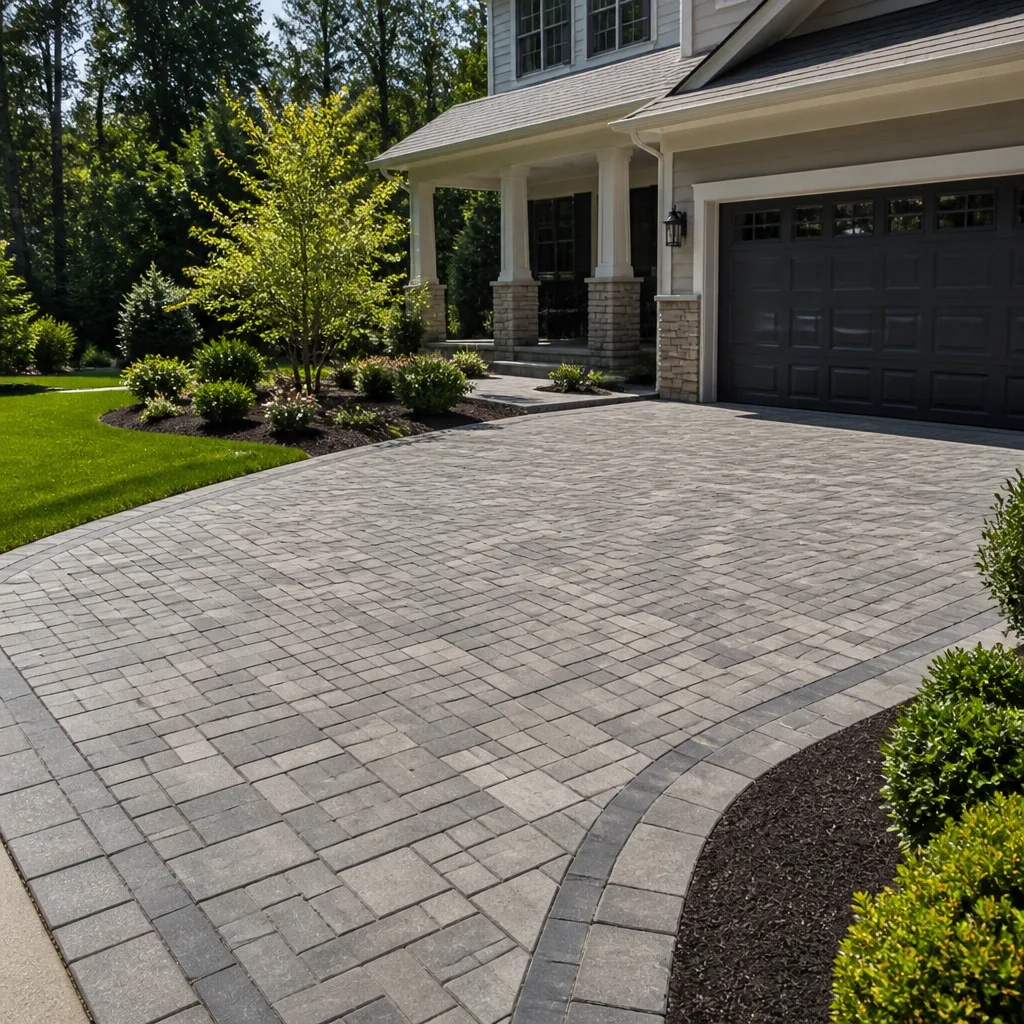 Driveway & pavers
 Kitchen remodeling
 Bathroom remodeling
 Home additions & ADU
 Roofing
 Windows & doors
 Fence
Free written scope consultation - allowances, timeline, and change-order rules on paper before a single trade is scheduled
Driveway & Pavers Maintenance Checklist for West Covina Homeowners
Pavers don’t fail from age. They fail from base failure. And in West Covina, where expansive clay soil can swell through a wet winter and shrink hard the following summer, that base can shift enough to crack a decade-old driveway that looked flawless the season before. The surface you park on is only the top inch of a much deeper system, and most maintenance advice tells you to seal and sweep and calls it a day. That advice ignores the ground underneath. This guide walks you through what actually keeps a West Covina driveway and paver surface alive: base depth, joint sand, edge restraint, drainage, and a season-by-season rhythm built for our heat and our rains.
Quick Answer
A West Covina driveway or paver surface lasts longest when you inspect joint sand after the rainy season, reseal before summer’s UV peak, check edge restraints each fall, and confirm the base was built with at least 4 inches of compacted Class II base over well-draining subgrade. Cosmetic spalling can be cleaned and sealed; sunken or rocking pavers usually signal base failure and need to be pulled and reset, not just topped off. If your surface drains toward the house or pools water in one corner, fix the drainage before anything else.
Styles & brands we work with
- Kitchen remodeling
- Bathroom remodeling
- Home additions & ADU
- Roofing
- Windows & doors
- Driveway & pavers
- Fence
Table of Contents
- Why West Covina’s Clay Soil Changes the Rules
- The Base Depth That Actually Prevents Heaving
- A Season-by-Season Maintenance Checklist
- The Drainage Detail Most Installers Skip
- Cosmetic Spalling vs. Structural Base Failure
- Concrete vs. Pavers vs. Exposed Aggregate
- Sealing, Sand, and Cleaning: What’s Worth It
- Repair or Replace: How to Decide
Why West Covina’s Clay Soil Changes the Rules
The San Gabriel Valley sits on some of the most expansive clay soil in Southern California, and West Covina is right in the middle of it. That clay absorbs water and swells, then dries and shrinks across the hot months. A driveway built directly on native soil without a properly compacted base layer will move with that clay. The pavers themselves rarely crack first; what happens is the base beneath them loses density, a low spot forms, and the surface starts to settle or rock.
Most generic paver guides are written for sandy or gravelly soils where drainage is easy and movement is minor. That’s not our situation. In West Covina, the soil is the main variable, and everything in a maintenance plan should account for the wet-dry swing.
What that means in practice:
- Expect movement at the edges first. The perimeter is where clay has the most room to expand, so edge restraints and border pavers are the earliest warning signs.
- Watch the transition between old and new concrete. If part of your drive is original 1970s concrete and part is newer, the joint between them is a stress point that shows movement first.
- Treat deep cracks and settling as soil signals, not surface problems. A crack that follows a straight line is often a subgrade issue, not a paver issue.
- Plan around the rainy season. West Covina sees periodic heavy El Niño rains, and those wet cycles are when base failure accelerates fastest.
If your base was built correctly, most of what goes wrong is cosmetic. If it wasn’t, no amount of sealing will save the surface. When you’re ready to look at a fresh install or a full rebuild, our driveway & pavers page walks through base prep, paver options, and what a properly built subgrade looks like in West Covina.
The Base Depth That Actually Prevents Heaving
Preventing heaving in West Covina comes down to one thing: a base that stays dense through the wet-dry cycle. In our experience, the base is where most driveway failures trace back to. A surface that never should have heaved is almost always underbuilt underneath.
For a residential West Covina driveway, the standard that holds up over time is a compacted Class II base layer that’s a minimum of 4 inches thick, laid over subgrade that’s been graded and drained away from the house. Class II is a crushed aggregate base classification, not a brand, and it compacts to a stable, load-bearing layer when installed in lifts and vibrated to density. Thinner bases, ungraded native soil, or a base that wasn’t compacted in stages will move.
Here’s the sequence that holds up:
- Strip and grade the native soil. Remove organic material and grade for positive drainage away from the structure.
- Compact the subgrade. Clay subgrade gets compacted before any base goes on top.
- Install Class II base in lifts. Spread in 2-inch lifts and compact each one, not all at once.
- Confirm the finished base is at least 4 inches thick and true. Check it with a straightedge before any pavers go down.
- Set edge restraints into the base, not on top. Restraints need to be anchored into the compacted base so they can’t push outward.
- Lay pavers with a sand setting bed, then compact and sweep joint sand into the surface.
When we quote a driveway, we walk the base plan and the drainage plan before we talk about paver color. That order matters. If you’re comparing bids, ask each one what base depth they’re using and whether they’re compacting in lifts. A bid that’s lower because the base is 2 inches instead of 4 isn’t a better price, it’s a shorter lifespan.
A Season-by-Season Maintenance Checklist
The right maintenance rhythm for a West Covina paver surface follows the local weather, not the calendar on a resealing product label. Our seasons here are wet, hot, and a long dry stretch in between. Each one asks something different of your driveway.
Late Winter to Early Spring: What to Check After the Rains
West Covina’s heavy rain cycles usually land in the winter months, and that’s when base movement accelerates. When the rains ease, walk the driveway on a dry afternoon and check three things:
- Joint sand levels. Look for gaps between pavers where the sand has washed out. Joint sand locks pavers in place, so gaps that go deep are a signal to refill.
- Pooling spots. Note any low areas that hold water for hours after rain stops. Standing water above the base means the drainage plan is failing somewhere.
- Edge line. Check the perimeter where the pavers meet the soil, the grass, or a curb. Any gap or outward lean means the edge restraint has moved.
Late Spring: Reseal Before the UV Peak
Our summer UV index is high, and UV breaks down the binder in most sealers faster here than the label suggests. If your surface was sealed, the seal should be in good shape before June. If it’s been more than a couple of seasons or you don’t know when it was last done, get an inspection before the heat sets in. Sealing too late in the summer traps moisture and does more harm than good, so if you miss the window, wait for fall.
Fall: Edge Restraint and Joint Inspection
Fall is when the ground is starting to dry back after summer and any movement that started during the rainy season becomes visible. Check edges, sweep in fresh joint sand, and clear any organic debris from the surface before the first fall rains return.
Dry Season Ongoing: Cleaning and Weed Watch
Sweep the surface regularly and pull weeds from joints before they establish. A pressure wash once a season is fine, but keep the nozzle above the surface and don’t blast joint sand out. Pulling weeds without refilling the joint is a losing game, so keep a bag of joint sand on hand.
The seasonal rhythm matters most on a driveway that takes direct sun, and most West Covina driveways do. It’s not the same schedule you’d use in a wetter or shadier climate.
The Drainage Detail Most Installers Skip
Most West Covina driveway failures that aren’t base related come down to drainage, and drainage is where we see the biggest gap between “looks fine” and “built to last.” West Covina lots are often flat, and flat lots don’t drain themselves. They need to be graded to do it, and that grading has to be planned, not left to chance.
Here’s what we mean. On a flat lot, a driveway that’s graded dead-level will hold sheet water after rain. That sheet water works into the joint sand, from the joint sand into the setting bed, and from there into the base. Over a season or two, the base stays saturated longer than it should, and saturated base under vehicle load loses density. That’s how a driveway that looked great one summer develops sunken pavers in a corner the next spring.
The fix is positive slope from the yard-side edge toward the street or toward a drainage point. The minimum most paver specifications ask for is a slope of about 1 to 2 percent on the paved surface, enough to move water off without making the driveway feel pitched. Where the house or a fence blocks the natural flow, a channel drain or a dry well at the low point handles what gravity can’t.
On a flat West Covina lot, we look at three things before we recommend a layout:
- Where the crown of the street is. The street crown sets your drainage destination on the curb side.
- Where the house foundation sits relative to grade. Slope has to go away from it, always.
- Where the low point is if the driveway has an inside corner. Every inside corner on a flat lot collects water, and every one needs a plan.
If your current driveway pools water in one spot, that’s the first thing to fix, before sealing, before joint sand, before anything else. When a full rebuild or rework makes sense, we plan the drainage alongside the pavers so the surface sheds water the way it should. You can see how that works through our broader Construction West Covina services.
Cosmetic Spalling vs. Structural Base Failure
Before you spend money on a repair, figure out which kind of failure you’re looking at. The two look similar from a standing height, but the fix is completely different, and treating base failure as a cosmetic problem is where a lot of homeowners lose money.
Cosmetic spalling
Spalling is when the top layer of a concrete surface flakes or peels slightly. On pavers, you’ll see surface discoloration and scuffing rather than peeling. Cosmetically, both can be addressed with cleaning and a proper sealer. Spalling on concrete isn’t usually a structural problem unless it’s widespread and deep. It tends to show up in the same areas where water repeatedly pools, so fixing the low spot often stops it.
Structural base failure
Base failure looks and behaves differently. Watch for:
- Pavers that rock underfoot. If a single paver moves when you step on it, the base under it has lost density.
- Broad settling. A dip wider than a foot across multiple pavers is almost always base movement, not a single paver problem.
- Sunken areas near edges or corners. Same story, different location.
- Cracks that run through multiple pavers in a line. That’s usually stress from below.
- Water pooling in the same low spot season after season. A drainage failure that’s now hiding a base problem.
The test we use: if the surface can be cleaned and sealed and the pavers sit firm, it’s cosmetic. If pavers move underfoot or a low spot keeps returning after you fill it, it’s structural. Replacing or resetting a structural failure without addressing the base underneath just restarts the clock on the same problem. When we inspect a candidate for repair, we look at the base and the drainage before we quote the surface work.
Concrete vs. Pavers vs. Exposed Aggregate
Not all driveway surfaces handle West Covina’s UV index, heat cycling, and heavy rains the same way, and each one comes with a different maintenance demand. Here’s a side-by-side view of how each one typically performs.
| Surface | UV & heat performance | Rain & drainage | Maintenance | Repair style |
|---|---|---|---|---|
| Poured concrete | Fades over time; hairline cracks are common | Sheet flow; needs slope | Seal every few seasons; fill cracks before winter | Patch or replace sections |
| Pavers | Holds color well; surface stays cooler to the touch | Permeable joints help water move to base; needs proper base and slope | Sweep joint sand, inspect edges, reseal periodically | Individual pavers can be lifted and reset |
| Exposed aggregate | Good color retention; textured surface can get dusty | Sheet flow; needs slope | Seal periodically; clean textured surface | Patch, but patches show |
In our experience, pavers are the surface that survives longest in a West Covina driveway that sees real vehicle traffic, because individual pavers can be lifted and reset if base movement happens. Concrete and exposed aggregate don’t offer that flexibility: when they settle, you patch or replace, and the patch is visible. Pavers also hide sub-base repairs well, since resetting a small section blends into the surface.
That’s not a knock on concrete or aggregate. If your driveway is original and you’ve never had a drainage issue, it may be fine. But when the base starts to give way, pavers are the surface that gives you options other than full replacement. For a paver project, we lean on brands like Belgard, Unilock, Techo-Bloc, Cambridge Pavers, and Tremron, so you’re choosing from established manufacturers rather than a single generic supply.
Sealing, Sand, and Cleaning: What’s Worth It
Three maintenance tasks come up on every paver driveway: sealing, joint sand, and cleaning. They’re worth doing, but each one has a right season and a wrong one, and doing them out of order wastes money.
Sealing
Sealing in late spring, before the UV peak, is what protects the paver surface through summer. Sealing too late in the season, or when the surface is still holding moisture, traps water in. The right time to seal is when the pavers have had several dry days to release moisture and there’s a stretch of dry weather ahead. Not every paver surface needs a sealer, and not every sealer is right for every paver type. If you’re not sure, get an inspection first.
Joint sand
Joint sand is the pavers’ interlock. It locks each paver in place against its neighbors so the surface acts like one plane, not a pile of individual pieces. When joint sand erodes, pavers start to loosen. Refill joints after the rainy season and any time you pull weeds, and never pressure-wash so aggressively that you blast the sand out.
Cleaning
Regular sweeping is the highest-value maintenance you can do on a paver driveway. Sweep leaves and organic debris off before they break down and stain. A season-once pressure wash keeps the surface clean without damaging the joints, as long as the nozzle stays above the surface.
On a West Covina driveway exposed to our summers, we usually recommend inspecting the seal before the UV peak and filling joint sand after the rains. Those two windows do most of the work.
Repair or Replace: How to Decide
Deciding to repair or replace comes down to how much of the surface has failed and whether the base is compromised. A single failed paver in an otherwise firm surface is a repair. A section that’s settled across a dozen pavers, with standing water and an edge that’s pulled away, is a signal that base and drainage both need attention.
What to gather before you decide:
- Mark the failed areas. Use chalk or tape to outline every spot where pavers rock, settle, or pool water.
- Count the pattern. One spot is a repair. Two or more linked spots across the same side of the driveway usually point to base issue.
- Check the edges. A pulled edge restraint is a reset job, not a rebuild, unless the surrounding pavers have moved with it.
- Look at the drains. If the low spot returns after a heavy rain, drainage needs sorting before any surface work.
If the answer is a full rebuild, that’s a larger project than a repair. What that often pulls a homeowner into is a conversation about whether the driveway is the right place to invest now or whether a broader exterior plan makes sense: a new driveway, a new fence installation, or an home additions & ADU project that expands your footprint and changes how the exterior of the house works. When we build a plan for a West Covina home, we look at the driveway in the context of the whole exterior rather than in isolation.
Common Mistakes to Avoid
- Sealing over a failing base. Sealing hides the surface symptom, but the base keeps moving underneath and the pavers settle further.
- Filling joints without checking the edge. If the edge restraint has pulled away, joint sand washes out again faster than you can refill it.
- Pressure-washing the joints out. Getting too aggressive with the nozzle strips joint sand, unlocks the pavers, and creates the movement you were trying to prevent.
- Ignoring a flat-lot drainage plan. A driveway built dead-level on a West Covina flat lot will hold sheet water after heavy rain until the base gives out.
- Choosing a paver color before the base depth. Base depth and drainage determine lifespan. Color is the last decision, not the first.
- Treating a settling paver as a cosmetic flaw. A paver that rocks underfoot is a base signal, and topping it off with sand doesn’t fix the cause.
- Skipping the pre-summer seal. UV degrades a paver surface faster in West Covina than it does in milder climates, and sealing before the peak is what keeps the color and surface together.
See the difference
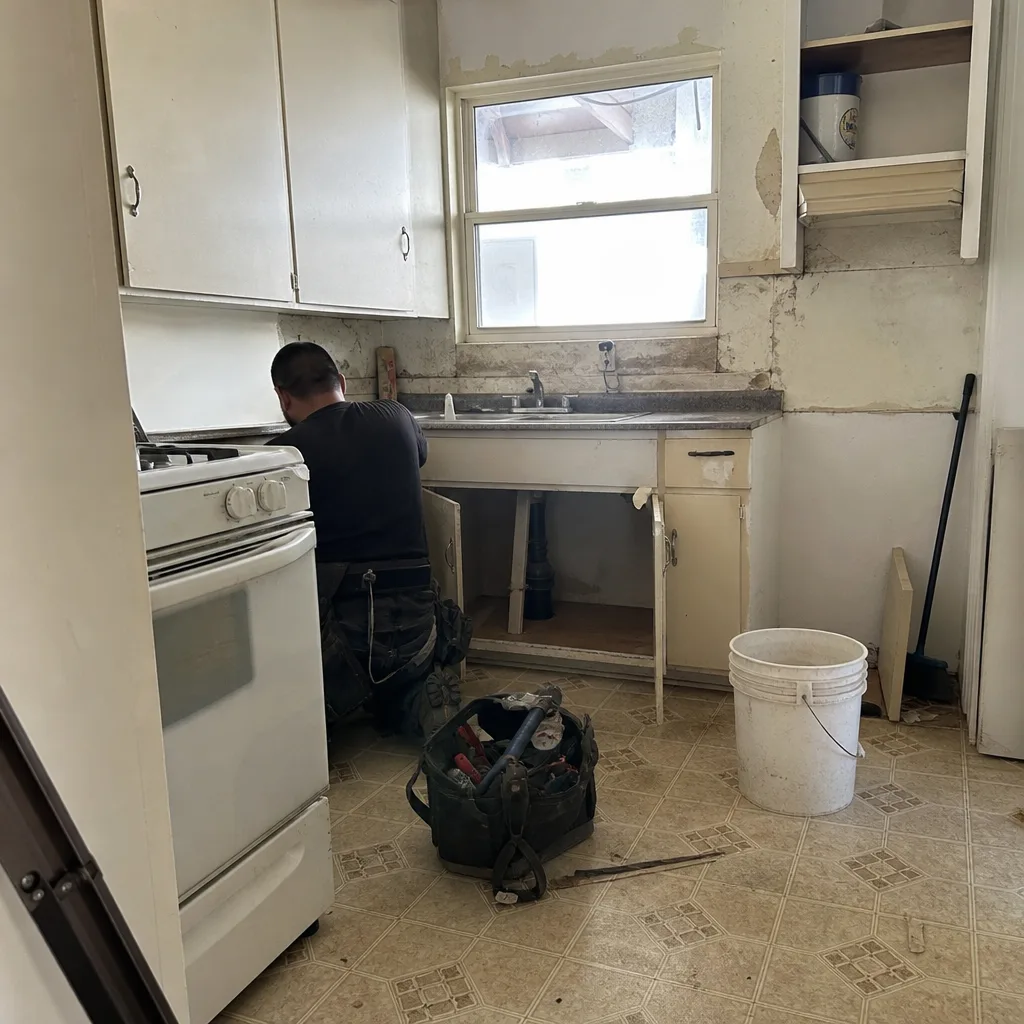 Before
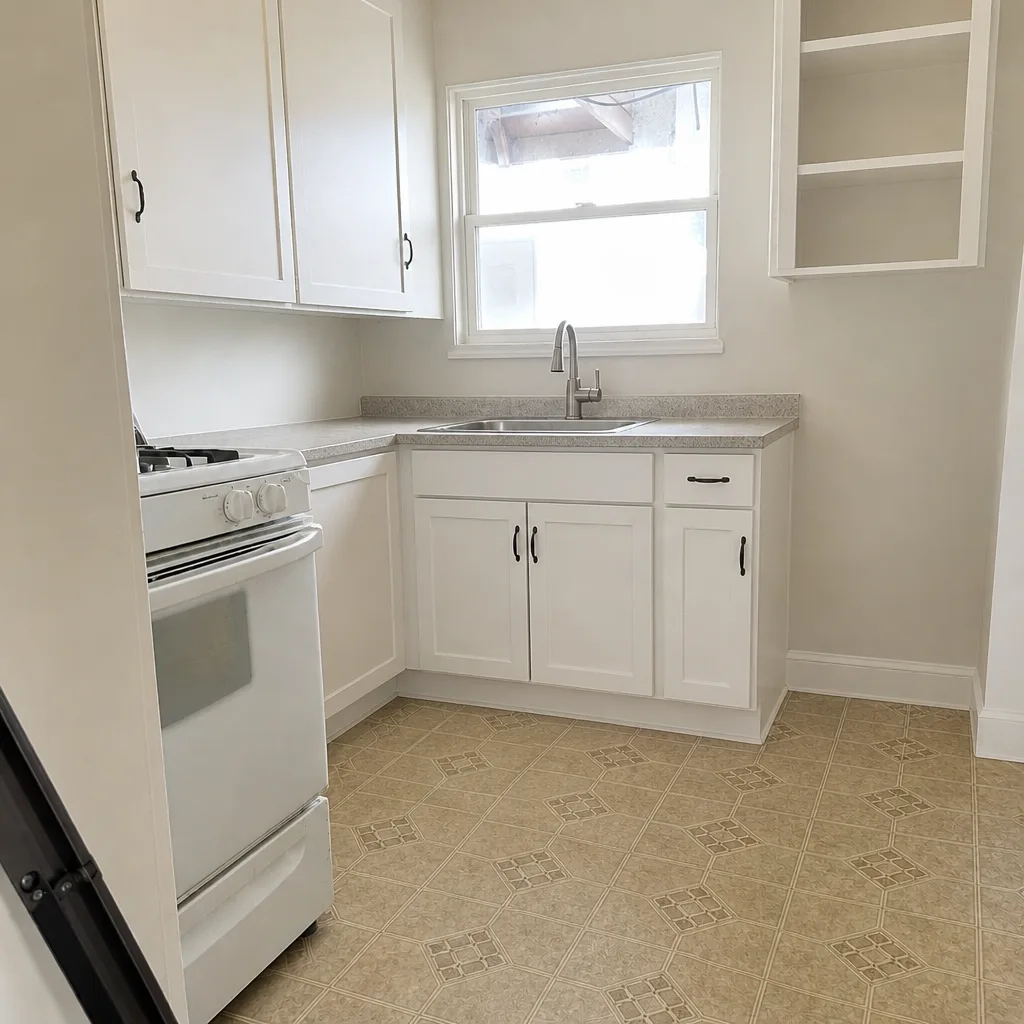 After
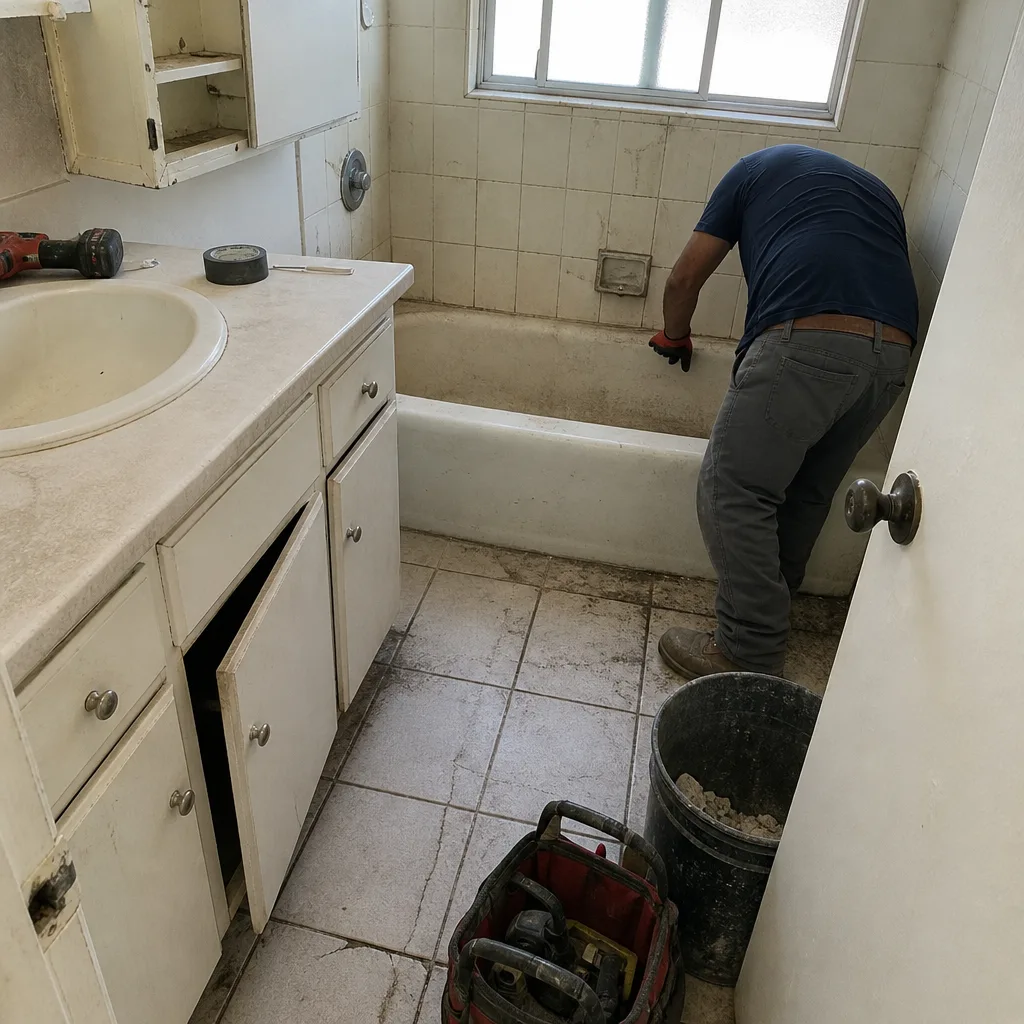 Before
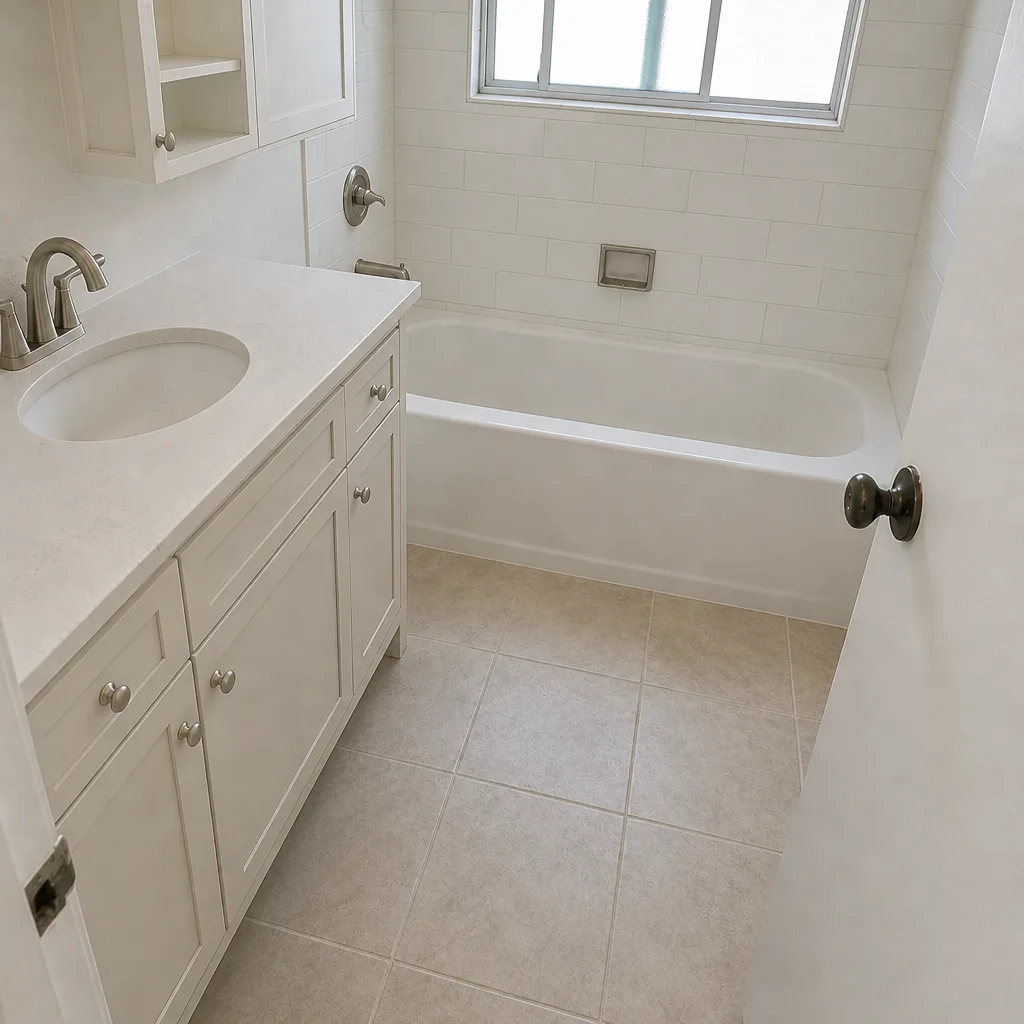 After
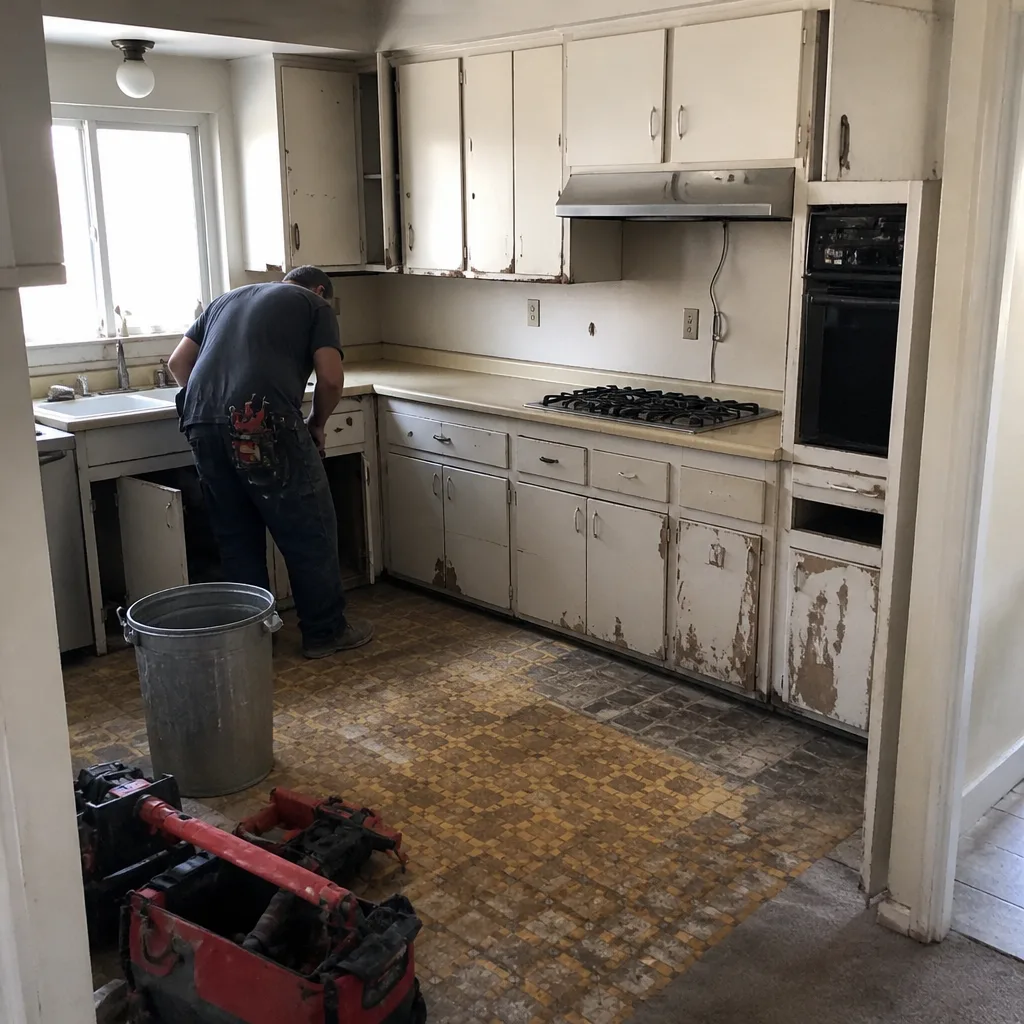 Before
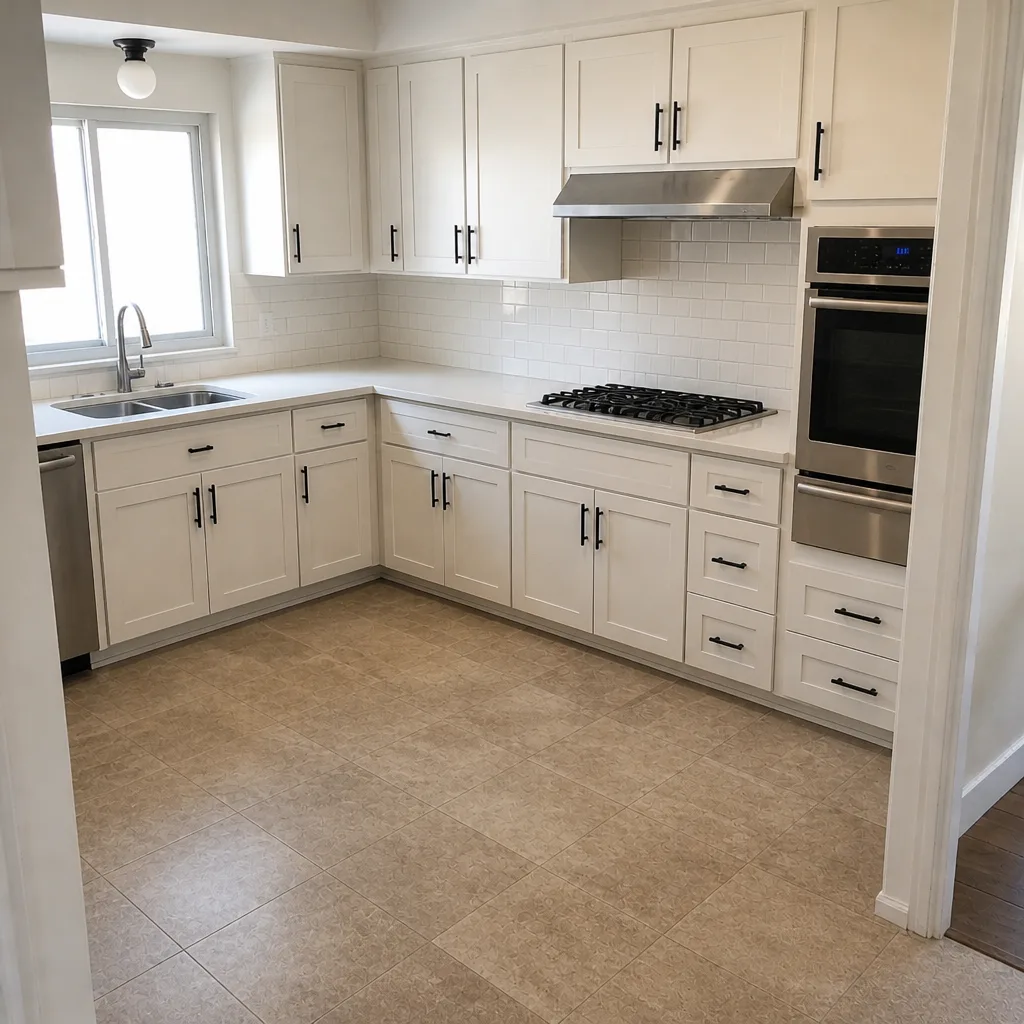 After
When to Call a Professional
Call a professional if any of the following is true for your West Covina driveway: pavers move underfoot in more than one spot; a low spot has returned after you’ve filled it; an edge restraint has pulled away from the surface; water pools toward the house or collects above the base; or a broad crack runs through multiple pavers. Anything that points to base or drainage failure is worth a look before more money goes into surface fixes. Our technicians have up to 10 years of experience with hardscape in this area, and Construction West Covina offers free estimates in West Covina: call (844) 320-3099. We answer 24/7, and fast dispatch runs 7am to 7pm, Sunday through Friday. Our driveway & pavers page covers install and repair scope in detail.
Frequently Asked Questions
Plan on resealing every few seasons, and inspect the seal late spring before summer’s UV peak gets going. West Covina’s high UV index breaks down sealers faster than a cool coastal climate would, so the right answer depends on when your surface was last sealed and how much traffic it takes. Call (844) 320-3099 for a free inspection and a written estimate.
Sinking pavers almost always point to base or drainage movement, not a paver defect. West Covina’s expansive clay soil swells and shrinks through the wet-dry cycle, and if the base wasn’t compacted properly or drainage sheds water toward a low spot, that side of the driveway settles. Call (844) 320-3099 to get it inspected before more money goes into surface fixes.
It can happen, but it’s not normal, and it’s a sign worth taking seriously. West Covina gets heavy winter rain, and a driveway that cracks after a wet season usually has a base or drainage problem underneath. Cracks that line up across multiple pavers are the strongest signal. Call (844) 320-3099 for a free estimate.
Cosmetic spalling is a surface issue that cleaning and resealing can usually address. Base failure shows up as pavers that rock underfoot, broad settling, sunken edges, or cracks that run through multiple pavers. If you’re not sure which you’re looking at, an inspection settles it before you spend money on the wrong fix. Estimates are free: call (844) 320-3099.
The standard that holds up is a compacted Class II base at least 4 inches thick, installed in lifts, over subgrade graded to drain away from the house. That depth and compaction keeps the base stable through West Covina’s wet-dry clay cycle. If you’re comparing bids, ask each one what base depth and compaction they’re using. For a written, itemized estimate, call (844) 320-3099.
No. We provide written, line-item quotes and fixed pricing, so the price you’re quoted is the price you pay for the scope you agreed to. If we find something during demolition that changes the scope, we stop and talk to you before doing anything that adds to the price. Call (844) 320-3099 to schedule your free estimate.
The Bottom Line
West Covina driveways live under conditions that most generic maintenance guides don’t account for: expansive clay soil, high UV summers, and periodic heavy rain that works its way into any weak spot in the base. Get the base right (Class II, at least 4 inches, compacted in lifts), plan drainage for a flat lot, and follow a season-by-season rhythm: joint sand after the rains, seal before the UV peak, edge restraints in fall. Then you can tell the difference between cosmetic spalling and base failure before you spend a dollar on either. When base or drainage issues show up, get eyes on the surface before more money goes into fixes. Call (844) 320-3099 for a free estimate. We answer 24/7. Fast dispatch from 7am to 7pm, Sunday through Friday. Written line-item quotes, fixed pricing, and one contractor for the roof, the windows, and the driveway.
Written by the team at Construction West Covina.